
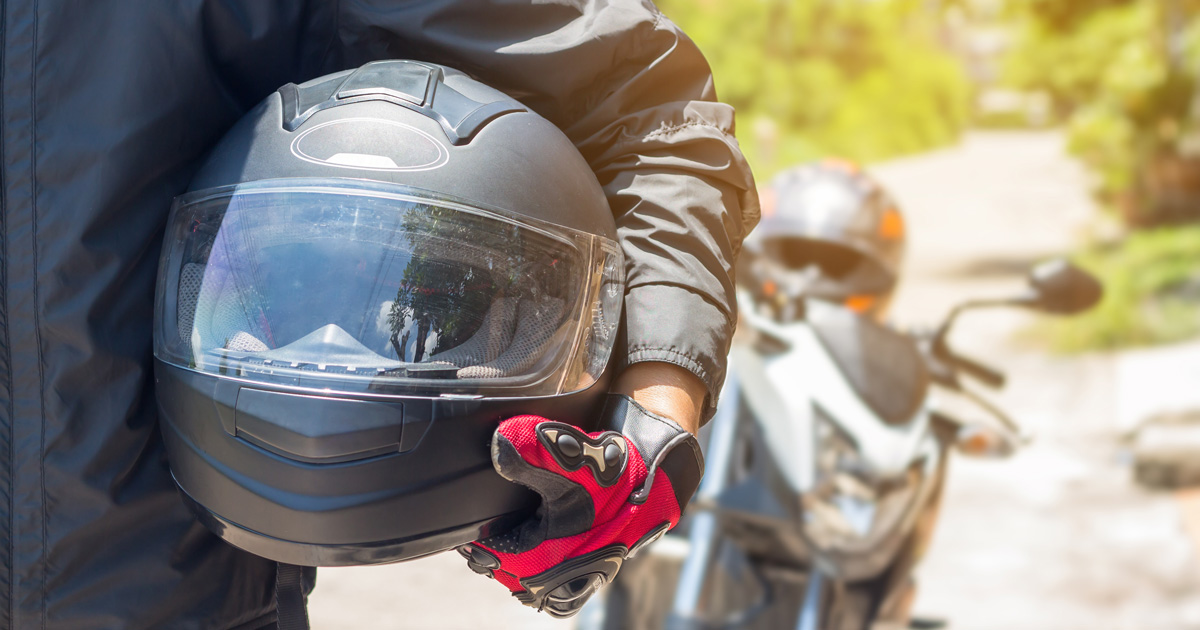
Across Dutchess, Orange, and Ulster counties, more than 50,000 motor vehicle occupants, nearly 400 motorcyclists, and over 160 bicyclists were involved in police-reported crashes in 2024 alone. The majority walked away without serious injuries. But the data from the Institute for Traffic Safety Management and Research (ITSMR) reveals a consistent pattern: people who were not using safety equipment were injured more severely and killed at dramatically higher rates than those who were.
This resource page examines the relationship between safety equipment compliance and crash outcomes across the three-county Hudson Valley region, using 2024 data and preliminary 2025 figures from ITSMR. It also explains how New York law treats safety equipment use in personal injury cases.
Seatbelt Use in Hudson Valley Car Crashes
In 2024, there were 50,510 motor vehicle occupants involved in crashes across Dutchess, Orange, and Ulster counties. The overwhelming majority were wearing seatbelts. But the small percentage who were not accounted for a disproportionate share of fatalities and serious injuries.
Hurt in a crash in Orange or Dutchess County? Talk to our Newburgh car accident lawyers or Poughkeepsie car accident lawyers.
| County | Total Occupants | Restraint Used | No Restraint | Unknown | Compliance Rate |
| Dutchess | 15,458 | 14,180 | 179 | 1,099 | 92% |
| Orange | 24,994 | 23,209 | 502 | 1,283 | 93% |
| Ulster | 10,058 | 9,381 | 232 | 445 | 93% |
| Three-County Total | 50,510 | 46,770 | 913 | 2,827 | 93% |
Source: ITSMR, 2024.
Seatbelt Use and Injury Severity (2024)
The gap between belted and unbelted occupants widens sharply as injury severity increases. While only 1.8% of all occupants across the three counties were unrestrained, they made up 25% of those killed.
| Injury Severity | Restraint Used | No Restraint | Unknown | Total | % Unrestrained |
| Killed | 37 | 13 | 2 | 52 | 25.0% |
| Serious (A) | 652 | 70 | 34 | 756 | 9.3% |
| Moderate (B) | 829 | 47 | 28 | 904 | 5.2% |
| Minor (C) | 4,244 | 100 | 111 | 4,455 | 2.2% |
| Uninjured | 40,761 | 672 | 2,644 | 44,077 | 1.5% |
Source: ITSMR, 2024. Three-county totals (Dutchess, Orange, Ulster).
The pattern is clear: among occupants killed in car crashes, one in four was not wearing a seatbelt. Among those with serious injuries, nearly one in ten was unrestrained. Among the uninjured, only 1.5% were not wearing a seatbelt. Preliminary 2025 data shows a similar trend, with 12 of 35 fatalities (34%) involving unrestrained occupants across the region.
New York’s Seatbelt Defense: Spier v. Barker
New York is one of the states where failure to wear a seatbelt can reduce the damages you recover in a personal injury case. The landmark decision in Spier v. Barker, 35 N.Y.2d 444 (1974), established that while seatbelt non-use does not affect who is at fault for an accident, it can reduce the plaintiff’s recovery if the defendant proves that some or all of the plaintiff’s injuries would have been prevented or lessened by wearing a seatbelt.
In practice, this means that after a car crash, the at-fault driver’s insurance company may argue that your injuries were made worse by not wearing a seatbelt. If a jury agrees, they can reduce your damages proportionally. This is not a bar to recovery. You can still sue and win. But the amount you receive may be reduced based on what a medical expert testifies the seatbelt would have prevented.
If you were injured in a car crash in Kingston, Newburgh, or Poughkeepsie, an experienced personal injury attorney can help counter the seatbelt defense and maximize your recovery.
Motorcycle Helmet Use in Hudson Valley Crashes
New York enforces a universal helmet law requiring all motorcycle riders and passengers to wear DOT-approved helmets and eye protection. Compliance across the Hudson Valley is high, but not universal. In 2024, 388 motorcyclists were involved in crashes across the three counties. Twenty-two were killed.
| County | Total | Helmeted | No Helmet | Unknown | Killed | Seriously Injured |
| Dutchess | 92 | 81 (88%) | 5 | 6 | 4 | 32 |
| Orange | 200 | 173 (87%) | 14 | 13 | 13 | 54 |
| Ulster | 96 | 80 (83%) | 5 | 11 | 5 | 27 |
| Total | 388 | 334 (86%) | 24 | 30 | 22 | 113 |
Source: ITSMR, 2024.
Orange County accounted for more than half of all motorcycle crash involvement and 13 of 22 fatalities across the region. Preliminary 2025 data shows 216 motorcyclists in crashes so far, with 8 fatalities. All 8 riders killed in 2025 were wearing helmets, underscoring that helmets reduce risk but do not eliminate it.
Because New York requires helmets by law, riding without one is a violation that can be used against you in a personal injury case under comparative negligence principles. If you sustained a head or brain injury while not wearing a helmet, insurers and defense attorneys will argue that the injury was caused or worsened by your non-compliance. This can reduce your damages proportionally. For more on motorcycle crash claims, see our motorcycle accident practice area or contact our offices in Kingston, Newburgh, or Poughkeepsie.
Bicycle Helmet Use in Hudson Valley Crashes
Unlike seatbelts and motorcycle helmets, bicycle helmets are only legally required for riders under 14 in New York State. The data shows that most adult cyclists in the Hudson Valley are not wearing helmets when they crash, and the injury outcomes are noticeably worse for those who go without.
In 2024, 162 bicyclists were involved in police-reported crashes across Dutchess, Orange, and Ulster counties. Only 34 (21%) were wearing helmets. Ninety-eight (60%) were not, and helmet status was unknown for 30 others.
| County | Total | Helmeted | No Helmet | Unknown | Killed | Seriously Injured |
| Dutchess | 64 | 19 (30%) | 35 | 10 | 2 | 10 |
| Orange | 59 | 8 (14%) | 36 | 15 | 0 | 11 |
| Ulster | 39 | 7 (18%) | 27 | 5 | 0 | 13 |
| Total | 162 | 34 (21%) | 98 | 30 | 2 | 34 |
Source: ITSMR, 2024.
Among the 34 bicyclists with serious injuries in 2024, the breakdown by helmet use tells a stark story:
| Injury Severity | Helmeted | No Helmet | Unknown | Total |
| Serious (A) | 2 | 19 | 13 | 34 |
| Moderate (B) | 14 | 33 | 4 | 51 |
| Minor (C) | 13 | 35 | 8 | 56 |
| Killed | 0 | 2 | 0 | 2 |
Source: ITSMR, 2024. Three-county totals.
Both bicyclists killed in 2024 were unhelmeted riders in Dutchess County. Among seriously injured bicyclists where helmet status was known, 19 of 21 (90%) were not wearing a helmet. Preliminary 2025 data shows a similar pattern: of 17 seriously injured bicyclists, only 2 were wearing helmets.
Although adults are not legally required to wear a bicycle helmet in New York, insurers may still attempt to reduce your personal injury recovery if they can demonstrate that a helmet would have prevented or reduced a head injury. This is especially relevant in cases involving traumatic brain injuries. For help with a bicycle accident claim, contact our offices in Kingston, Newburgh, or Poughkeepsie.
How Safety Equipment Affects Your Personal Injury Settlement
New York follows a pure comparative negligence system under CPLR 1411, meaning you can recover damages even if you were partially at fault. But the amount you receive can be reduced by your percentage of fault, and non-use of required or recommended safety equipment is one factor that insurers and defense attorneys routinely raise.
The legal impact of safety equipment depends on the type of crash:
Car crashes: Not wearing a seatbelt is the most established defense. Under Spier v. Barker, the defendant must prove through expert medical testimony that specific injuries would have been reduced by a seatbelt. The burden is on the defense, not on you.
Motorcycle crashes: Because helmets are required by law, riding without one strengthens the defense’s comparative negligence argument. A head injury sustained without a helmet is the most vulnerable scenario for a reduced recovery.
Bicycle crashes: For adult riders, helmet use is not legally mandated. Courts have been less consistent in allowing helmet non-use to reduce damages, but insurers frequently raise the argument, particularly in cases involving head injuries. A strong attorney can push back on this defense.
The bottom line: not wearing safety equipment does not prevent you from filing a personal injury claim, and it does not mean you were at fault for the crash. But it can reduce the amount you recover. An experienced personal injury attorney will anticipate this defense and build your case accordingly.
Frequently Asked Questions
Yes. In New York, not wearing a seatbelt does not bar you from filing a claim. However, under the precedent set by Spier v. Barker, a jury may reduce your damages if the defense can prove that wearing a seatbelt would have prevented or lessened your specific injuries.
It can. Because New York requires all riders to wear DOT-approved helmets, failure to wear one may be used against you under comparative negligence. If you sustained a head injury while riding without a helmet, the defense will likely argue your injuries were worsened by non-compliance. An attorney can help counter this argument.
No. New York only requires helmets for bicyclists under 14. However, insurers may still argue that your head injuries would have been reduced by a helmet. While this argument is legally weaker than the seatbelt or motorcycle helmet defense, it is still commonly raised in settlement negotiations.
New York’s comparative negligence system (CPLR 1411) allows you to recover damages even if you were partially at fault. Your recovery is reduced by your percentage of fault. Non-use of safety equipment can be considered a contributing factor to your injuries, potentially reducing but not eliminating your damages.
There is no fixed percentage. The reduction depends on the medical evidence linking your specific injuries to the absence of a seatbelt. A defense expert might testify that a seatbelt would have prevented a spinal injury, for example, while the rest of your injuries would have occurred regardless. Only the preventable portion is subject to reduction.
Mainetti & Mainetti, P.C. offers free consultations at three offices: Kingston (845-600-0000), Poughkeepsie (845-404-1700), and Newburgh (845-670-7000). Our firm handles car, motorcycle, bicycle, and pedestrian accident cases throughout Dutchess, Orange, and Ulster counties.