
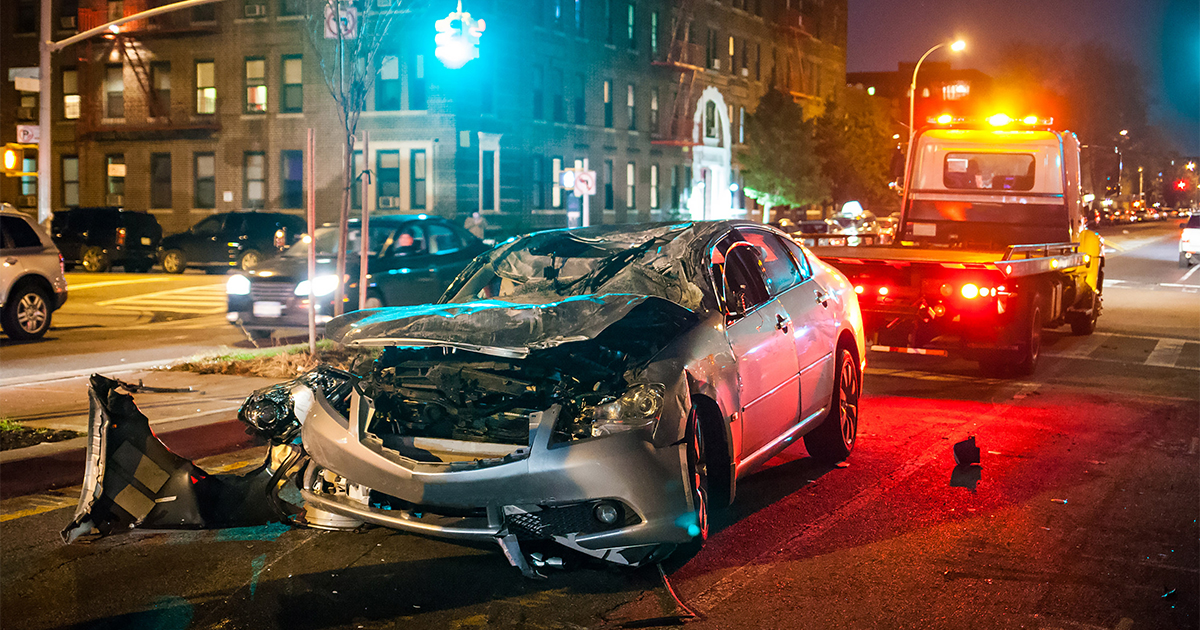
Behind every fatal crash statistic is a family whose life has been permanently altered. In many cases, these deaths are not unavoidable “accidents,” but the result of preventable negligence, whether by another driver, a commercial vehicle operator, a roadway design failure, or a dangerous condition that should have been corrected.
Understanding where fatal crashes tend to occur and under what circumstances is not just a matter of public safety. It is also essential when evaluating whether a wrongful death claim may exist under New York law. Patterns involving excessive speed, known hazardous corridors, fixed-object impacts, pedestrian strikes, or repeat crash locations can all point to failures that extend beyond simple driver error.
For families who have lost a loved one, a wrongful death action is often the only way to uncover what truly happened, hold responsible parties accountable, and seek compensation for the financial and emotional losses left behind. This page is intended to provide context, not only about crash risk in the Hudson Valley, but about when a fatal collision may warrant deeper legal scrutiny.
Based on publicly available National Highway Traffic Safety Administration fatal crash data, Dutchess, Orange, and Ulster Counties collectively experience an average of approximately 66 fatal car crashes each year. While fatal crashes are statistically rare compared to the total number of trips made across the region, their impacts are profound, and the conditions under which they occur are often not random.
Hudson Valley Fatal Car Accident Statistics (Ulster, Dutchess & Orange Counties)
A review of publicly available fatal crash records across the Hudson Valley reveals several consistent and important patterns. While fatal crashes occur on a wide variety of roads and under many different circumstances, the data shows that these tragedies are far from evenly distributed.
Most Fatal Crashes Occur on State, U.S., and County Highways, Not Local Streets
Across Ulster, Dutchess, and Orange Counties, the majority of fatal crashes occurred on state highways, U.S. highways, and county roads, rather than on local residential streets or limited-access interstates:
| Type of Road | Number of Crashes |
| State Highway | 198 |
| U.S. Highway | 109 |
| County Road | 72 |
| Local Street – Township | 56 |
| Interstate | 45 |
| Local Street – Municipality | 20 |
| Other | 19 |
| County | 10 |
State highways account for the largest share of fatal crashes, followed closely by U.S. highways and county roads. By contrast, interstates represent a significantly smaller portion of fatal crashes, despite carrying high volumes of traffic. Local municipal streets account for an even smaller share.
This pattern underscores a recurring theme in fatal crash analysis: roads designed for speed but used for everyday local travel often present the greatest risk. These corridors combine higher speed limits with frequent access points, intersections, and pedestrian activity, conditions that can turn a momentary lapse or roadway hazard into a fatal event.
Fatal Crashes Are Most Likely to Occur During Afternoon and Evening Hours
Fatal crashes in the Hudson Valley are not evenly distributed throughout the day. Instead, they cluster during late morning, afternoon, and early evening hours, with the highest concentration occurring between approximately 3:00 p.m. and 8:00 p.m.
35 fatal crashes occurred at 4 P.M., 34 at 3 P.M., 33 at 8 P.M., and 31 at 6 P.M. The least occurred in the early hours of the morning, with 8 each at 2 and 4 A.M., and 10 at 3 A.M.
This time window coincides with:
- Afternoon and evening commutes
- School dismissal and after-school travel
- Increased pedestrian and cyclist activity
- Fatigue at the end of the workday
These conditions increase the likelihood of conflicts between vehicles, pedestrians, and cyclists, particularly on regional highways that pass through towns and villages rather than bypassing them.
Fixed Objects and Non-Motorists Play a Major Role in Fatal Crashes
Public fatal crash records show that many deadly collisions involve more than just vehicles striking one another. Across the Hudson Valley, fixed objects and non-motorists appear repeatedly in fatal crashes, particularly on local and regional highways.
214 crashes involved “motor vehicle in-transport” as the “First Harmful Event” of the fatal incident. More than 70 fatal crashes involved pedestrians, and at least 16 involved cyclists, underscoring the heightened risk faced by people outside of vehicles on roads designed primarily for faster traffic.
- 214 fatal crashes involved a moving motor vehicle
- 73 involved pedestrians
- 16 involved cyclists
- 55 involved collisions with trees
- 35 involved guardrail impacts
- 25 involved utility poles or light supports
- 20 involved rollovers
- 150+ involved some form of fixed roadside object
These types of crashes raise important questions about roadway design, shoulder conditions, clear zones, and whether known hazards were adequately addressed, issues that are often central in wrongful death investigations.
Fatal Crashes Are Spread Across Many Communities, But Concentrate Along Key Corridors
Fatal crashes occur across dozens of towns, villages, and cities throughout the Hudson Valley. Larger population centers naturally see higher numbers, but the data also shows repeated fatalities in smaller communities connected by regional highways like these:
| Road Name | Number of Crashes |
| US-9W | 29 |
| I-84 | 27 |
| US-6 | 18 |
| SR-17 | 18 |
| US-44 | 17 |
| US-9 | 15 |
| SR-52 | 15 |
| I-87 | 14 |
| SR-55 | 13 |
| SR-17K | 11 |
Rather than being confined to a handful of intersections, fatal crashes tend to recur along specific travel corridors that serve as daily routes for commuters, commercial vehicles, and local traffic alike. This reinforces the importance of examining patterns over time, rather than treating each fatal crash as an isolated event.
The Elements in a Wrongful Death Claim
Most car accidents are the result of some kind of negligence. In New York State, there are five necessary elements to a wrongful death claim:
- A death has occurred
- It was caused by another party’s negligent conduct
- If the victim had survived, they could have sued for damages
- The victim has a survivor that suffered a loss
- There are recoverable damages
There are usually two categories of recoverable damages in a wrongful death lawsuit:
- Losses suffered by the deceased’s estate resulting from the death, including medical bills, funeral/burial expenses, and the value of lost wages or support or care that the family member was providing
- Pain, suffering and loss of companionship for the deceased’s family members
A basis for a wrongful death lawsuit on a local highway could include negligence on the part of other drivers, passengers, the conditions or design of the road, or a defect by the manufacturer of the vehicle.
In some cases, wrongful death claims arising from fatal car crashes result in significant recoveries for surviving families, reflecting the seriousness of the underlying negligence.
Wrongful Death Settlements Obtained by Mainetti & Mainetti, P.C.
If a loved one has died as the result of another party’s negligence, a wrongful death claim can hold the responsible party accountable for their actions and compensate you for your pain and suffering. Give us a call at 845-600-0000 to schedule a free consultation at our offices in either Kingston, New Windsor, or Poughkeepsie.
Ulster County Fatal Crash Analysis (2016 – 2023)
Crashes Per Year
There have been an average of 15 fatal crashes per year in Ulster County, with highs of 20 in 2017 and 19 in 2020, and lows of 12 in 2021 and 13 in 2016.
What kinds of accidents were they?
In the crashes we looked at, 42 of them were caused by another “motor vehicle in-transport.) 16 involved pedestrians, while 14 involved a car hitting a tree. 10 involved hitting the face of a guardrail, 8 involved a utility pole or light support, and 7 involved a bicyclist.
Time/Day
As in Orange and Dutchess Counties, most Ulster County fatal car crashes took place in mid-afternoon, with 10 each occurring in the hours of 3, 4 and 5 p.m. each.
Top Risk Areas for Fatal Car Crashes*
- Kingston – 27 crashes
- Lloyd – 15 crashes
- Gardiner – 13 crashes
- Saugerties – 12 crashes
- Wawarsing – 7 crashes
- Rosendale – 5 crashes
- Marbletown – 5 crashes
- New Paltz – 5 crashes
- Wallkill – 4 crashes
- Esopus – 4 crashes
Roads Most Frequently Involved in Fatal Crashes in Ulster County
- Route 9W – 19 crashes
- Route 44 – 8 crashes
- Route 32 – 6 crashes
- Route 209 – 6 crashes
- Route 28 – 7 crashes
- Route 299 – 6 crashes
- Route 52 – 5 crashes
- I-87 (The Thruway) – 5 crashes
Orange County Fatal Crash Analysis (2016 – 2023)
Crashes Per Year
There have been an average of 29 fatal crashes in Orange County NY per year, with highs of 37 in 2022 and 34 in 2017, and lows of 12 in 2021 and 13 in 2016.
What kinds of accidents were they?
In the crashes we looked at, 105 were caused by another “motor vehicle in-transport.” 28 involved pedestrians, while 24 involved a car hitting a tree. 15 involved hitting the face of a guardrail, 11 involved a rollover, and 9 involved a utility pole or light support.
Time/Day
17 crashes occurred at noontime, and 14 occurred around both 8 and 9 p.m. in Orange County, NY.
Top Risk Areas for Fatal Car Crashes*
- Newburgh – 39 crashes
- Tuxedo Park – 20 crashes
- Circleville – 19 crashes
- Montgomery – 19 crashes
- Monroe – 12 crashes
- New Windsor – 12 crashes
- Goshen – 12 crashes
- Warwick – 10 crashes
- Highland 9 crashes
- Port Jervis – 9 crashes
Roads Most Frequently Involved in Fatal Crashes in Orange County
- I-84 – 21 crashes
- Route 17 – 18 crashes
- Route 6 – 18 crashes
- Route 17k – 11 crashes
- Route 9W – 10 crashes
- I-87 – 9 crashes
- Route 32 – 9 crashes
- Route 52 – 6 crashes
- Route 209 – 5 crashes
- Route 211 – 5 crashes
Dutchess County Fatal Crash Analysis (2016 – 2023)
Crashes Per Year
There have been an average of 21 fatal car crashes in Dutchess County per year, with highs of 27 in 2020 and 26 in 2023, and lows of 15 in 2019 and 18 in 2017.
What kinds of accidents were they?
In the crashes we looked at, 67 of them were caused by another “motor vehicle in-transport.) 29 involved pedestrians, while 17 involved a car hitting a tree. 10 involved hitting the face of a guardrail, 8 involved a utility pole or light support, and 6 involved an embankment.
Time/Day
As in Orange and Ulster Counties, most Dutchess County fatal car crashes took place in the early to mid-afternoon, with 14 at 1 P.M., 13 at 3 P.M., and 12 each at 4 and 5 P.M.
Top Risk Areas for Fatal Car Crashes*
- Poughkeepsie – 21 crashes
- Fishkill – 19 crashes
- LaGrangeville – 17 crashes
- Hyde Park – 15 crashes
- Hopewell Junction – 14 crashes
- Wappingers – 10 crashes
- Millbrook – 9 crashes
- Rhinebeck – 9 crashes
- Amenia – 7 crashes
- Pleasant Valley – 7 crashes
Roads Most Frequently Involved in Fatal Crashes in Dutchess County
- Route 9 – 15 crashes
- Route 55 – 13 crashes
- Route 82 – 10 crashes
- Route 44 – 9 crashes
- Route 9D – 8 crashes
- Route 22 – 8 crashes
- Route 9G – 5 crashes
- I-84 – 5 crashes
*These figures reflect total fatal crash counts, not population-adjusted risk, and are influenced by traffic volume and the presence of major regional roadways.